

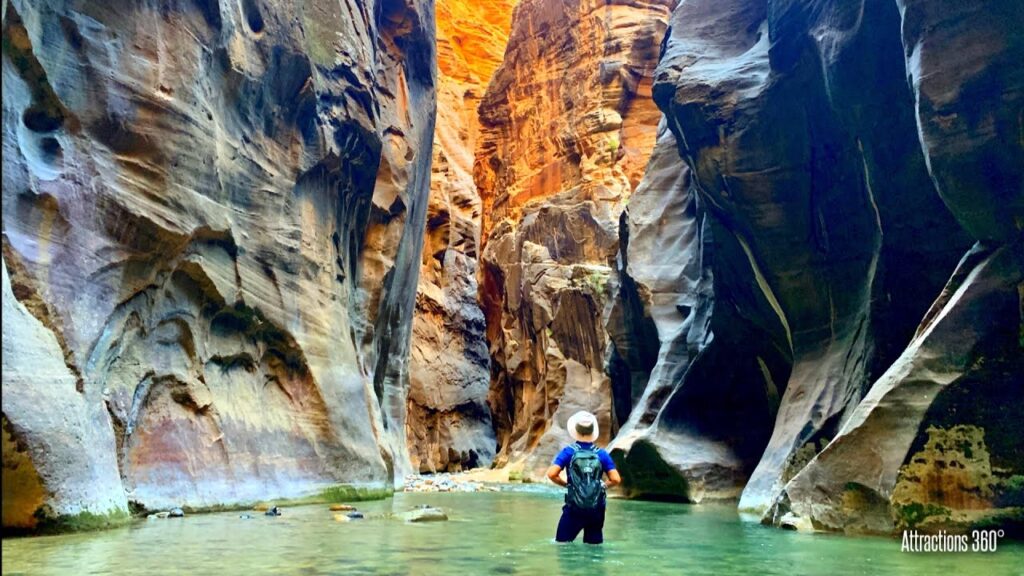
Angels Landing and The Narrows: The Ultimate Guide to Zion National Park’s Best Hikes
Meta Description: Planning a trip to Zion National Park? Discover everything you need to know about hiking Angels Landing and The Narrows—permits, tips, safety, and must-see highlights of these iconic trails.
Introduction
Zion National Park, in southern Utah, is a paradise for hikers, climbers, and nature lovers. Among its many stunning trails, two stand out as world-famous adventures: Angels Landing and The Narrows.
These hikes couldn’t be more different—one is a heart-pounding climb along narrow ridges, while the other is a serene journey through a river-carved canyon. Whether you’re chasing adrenaline or tranquility, Zion offers both.
In this guide, we’ll cover everything you need to know before hiking these iconic trails: history, safety, logistics, and insider tips.
Angels Landing: Zion’s Legendary Cliffside Hike
Trail Overview
Distance: 5.4 miles round trip
Elevation Gain: ~1,488 feet
Difficulty: Strenuous
Permit Required: Yes (lottery system)
Time to Complete: 4–5 hours
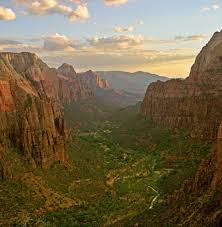
Angels Landing has been called one of the most thrilling hikes in the United States. The trail begins with steep switchbacks, climbs to Scout Lookout, and then traverses a narrow ridge with sheer 1,000-foot drop-offs on both sides.
At the summit, hikers are rewarded with panoramic views of Zion Canyon that are truly unforgettable.
History of Angels Landing
The name “Angels Landing” dates back to 1916 when a Methodist minister, upon seeing the dramatic cliffs, declared that only angels could land there. In 1926, the trail was completed, and since then, it has become one of Zion’s most popular hikes.
Safety and Permit Information
Chains: The final half-mile features anchored chains to help hikers ascend safely.
Exposure: The trail is not recommended for people with a fear of heights or balance issues.
Permit System: Introduced in 2022 to reduce overcrowding. Applications are available through the NPS lottery system.
Pro Tip: If you don’t get a permit for the final section, you can still hike to Scout Lookout, which offers stunning views without the exposure.
Best Time to Hike Angels Landing
Spring (March–May): Cool temperatures and blooming wildflowers.
Fall (September–November): Ideal weather and fewer crowds.
Summer: Extremely hot (often above 100°F), making the hike dangerous.
Winter: Less crowded but icy conditions possible.
What to Bring
Hiking boots with strong grip
At least 2 liters of water per person
Snacks or energy bars
Sunscreen, hat, and sunglasses
Permit confirmation (if hiking final section)
The Narrows: Hiking Through the Virgin River
Trail Overview
Distance: Up to 16 miles round trip (most do 6–9 miles)
Elevation Gain: Minimal, but strenuous due to river hiking
Difficulty: Moderate to strenuous, depending on water flow
Permit Required: Only for the top-down through hike
Time to Complete: 4 hours to full day
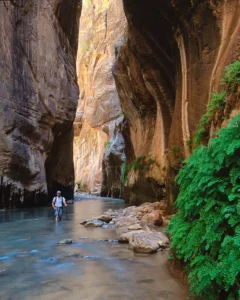
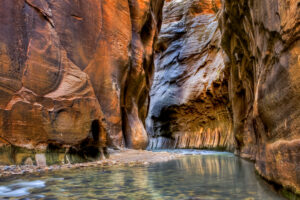
The Narrows is Zion’s most unique hike—there’s no traditional trail. Instead, you wade through the Virgin River, surrounded by towering sandstone walls that reach over 1,000 feet high.
Highlights of The Narrows
Wall Street: The canyon narrows to just 20 feet wide, with dramatic cliffs above.
Cool River Trekking: The refreshing water makes it especially enjoyable on hot summer days.
Natural Wonder: Carved over millions of years, this canyon is a showcase of geological beauty.
Safety in The Narrows
Flash Floods: The biggest danger. Always check the weather and park alerts before entering.
Water Depths: Expect knee-to-waist-deep water; after snowmelt, it can be much deeper.
Cold Water: In spring, water temperatures can be very chilly—wetsuits or dry suits are often necessary.
Gear Checklist for The Narrows
Sturdy water shoes or canyon boots
Neoprene socks for warmth
Trekking pole or wooden walking stick
Dry bag for phone and valuables
Lightweight backpack with snacks and water
Pro Tip: You can rent gear in Springdale, just outside the park entrance.
Planning Your Visit to Zion National Park
How to Get There
Nearest Airports: Las Vegas (2.5 hrs), Salt Lake City (4.5 hrs), St. George Regional (1 hr).
Closest Town: Springdale, Utah—just outside the park entrance, full of hotels, restaurants, and outfitters.
Where to Stay
Inside the Park: Zion Lodge (limited availability, book early).
Outside the Park: Springdale offers a wide range of options, from budget-friendly motels to luxury resorts.
Best Time to Visit Zion
Spring & Fall: Ideal weather and moderate crowds.
Summer: Very crowded and dangerously hot for strenuous hikes.
Winter: Quiet and beautiful, but some trails may be icy.
FAQs
1. Do I need a permit for Angels Landing?
Yes, for the final chain section. Apply through the National Park Service’s lottery system.
2. Do I need a permit for The Narrows?
Not for the bottom-up hike from the Riverside Walk. A permit is only needed for the top-down 16-mile thru-hike.
3. Are these hikes kid-friendly?
The Narrows (short bottom-up section) can be suitable for older kids. Angels Landing is not recommended for children due to steep exposure.
4. Can I hike both in one day?
It’s possible but not recommended. Each hike deserves a full day for safety and enjoyment.
Final Thoughts
Hiking Angels Landing and The Narrows is an adventure of a lifetime. These trails highlight two completely different aspects of Zion National Park—thrilling heights and tranquil river canyons.
Whether you’re clinging to the chains high above the canyon floor or wading through the Virgin River’s cool waters, both hikes offer experiences that are truly unforgettable.
If you’re planning a trip to Utah’s first national park, put these hikes at the top of your bucket list—you won’t regret it.
Yellowstone National Park Travel Blueprint
Plan an unforgettable first journey through geyser basins, wildlife-filled valleys, and epic canyon vistas with this curated guide for new explorers.
Your First-Time Yellowstone Game Plan
Yellowstone stretches across Wyoming, Montana, and Idaho, with 2.2 million acres of geothermal marvels, wildlife habitats, and alpine rivers. For first-time visitors, the park’s scale can feel overwhelming—this guide breaks everything down into digestible steps, from choosing the right season to pinpointing nightly accommodations and crafting a balanced itinerary.
Why Visit
Experience geysers that burst skyward, technicolor hot springs, thundering waterfalls, and free-roaming herds of bison and elk—all in one trip.
Who It’s For
Outdoor lovers, families, photographers, and wildlife enthusiasts seeking iconic vistas with manageable hikes and scenic drives.
Time Commitment
Dedicate at least 3–4 days for a rewarding introduction, with extra time if you want to hike backcountry trails or explore surrounding towns.

Grand Prismatic Spring coats the Midway Geyser Basin in vivid hues—best viewed from the overlook trail near Fairy Falls.
Best Times to Visit
Yellowstone is a year-round destination, but access and experiences shift dramatically between seasons. Choose based on priorities:
Late Spring (May–June)
- Wildflowers and roaring waterfalls at peak flow.
- Wildlife babies in Lamar and Hayden valleys.
- Cool mornings, lingering snow at higher elevations.
Summer (July–August)
- All park roads and services are open.
- Warm days perfect for hiking and boating.
- Expect crowds—start early and book lodging far ahead.
Early Fall (September)
- Crisp air, golden aspens, active wildlife.
- Fewer crowds after Labor Day.
- Nighttime temps dip below freezing—pack layers.
Winter (Dec–Mar)
- Snowcoach tours to geysers, cross-country skiing.
- Roads close to private vehicles—plan guided excursions.
- Peaceful landscapes and dramatic photo opportunities.
Getting There & Moving Around
Yellowstone is remote. Arrive by air to nearby regional airports, then rent a car or join a guided tour for maximum flexibility.
Closest Airports
- Jackson Hole (JAC) – 2 hours to South Entrance; scenic Grand Teton access.
- Bozeman (BZN) – 1.5 hours to North Entrance; great for Gardiner stays.
- Cody (COD) – 2 hours to East Entrance; western heritage town.
- Salt Lake City (SLC) – 5 hours; budget flights and road trip potential.
Driving Reality
- Figure 30–45 minutes between major attractions; speed limits average 45 mph.
- Download offline maps; cellular service is sparse.
- Gas stations are limited—refuel in gateway towns.
Guided Tour Options
- Full-day wildlife safaris in Lamar Valley (6–8 hrs).
- Geothermal basin tours with naturalist guides.
- Photography workshops at sunrise/sunset.
- Winter snowcoach or snowmobile routes to Old Faithful.
Where to Stay
Decide between in-park lodges for convenience or gateway communities for amenities and dining variety.
In-Park Lodges
- Old Faithful Inn – Iconic log architecture steps from the geyser.
- Lake Yellowstone Hotel – Elegant lakefront rooms and views.
- Canyon Lodge – Modern rooms central to both loops.
- Reserve 8–12 months ahead during peak seasons.
Gateway Towns
- West Yellowstone, MT – Family hotels, dining, IMAX, rental shops.
- Gardiner, MT – North Entrance charm, hot springs nearby.
- Jackson, WY – Upscale mountain town with art, cuisine.
- Cody, WY – Rodeo culture and Buffalo Bill Center.
Camping & Glamping
- 12 campgrounds; some reservable (Madison, Canyon, Bridge Bay).
- Backcountry permits for multiday treks—apply early.
- Luxury glamping in nearby Big Sky, MT or Wapiti Valley, WY.
Signature 3-Day First-Timer Itinerary
Balance geothermal wonders, wildlife, and canyon viewpoints without rushing. Add buffer time to account for bison traffic jams.
Day 1 · Lower Loop Highlights
- Start at Old Faithful Visitor Education Center, catch an eruption.
- Walk Upper Geyser Basin boardwalks to Morning Glory Pool.
- Drive to Grand Prismatic Spring Overlook via Fairy Falls trail.
- Sunset at Firehole Lake Drive or Norris Geyser Basin.
Day 2 · Canyon & Lake Country
- See sunrise at Artist Point, Grand Canyon of the Yellowstone.
- Hike North Rim Trail to Lookout and Inspiration points.
- Picnic by Hayden Valley—prime for bison herds midday.
- Evening boat ride or lakeside stroll near Lake Village.
Day 3 · Wildlife Safari & Mammoth
- Pre-dawn departure to Lamar Valley for wolves and pronghorn.
- Coffee stop at Roosevelt Lodge, consider horseback trail ride.
- Explore Mammoth Hot Springs Terraces boardwalks.
- Soak at Boiling River (check current closures).
Choose Your Yellowstone Adventure
Blend signature activities with deeper experiences tailored to your interests.
Wildlife Watching
- Hire a naturalist with spotting scopes for dawn safaris.
- Focus on Lamar Valley for wolves, Hayden Valley for herds.
- Carry binoculars; stay 25 yards from bison/elk, 100 yards from bears/wolves.
Hiking & Scenic Walks
- Mount Washburn (6.4 miles) for panoramic views.
- Uncle Tom’s Trail stairs to the base of Lower Falls.
- Fairy Falls to Midway Geyser Basin overlooks.
Water & Adventure
- Guided kayaking on Yellowstone Lake (late June–Sept).
- Whitewater rafting in the Gardiner area (Class II–III).
- Fly-fishing with licensed outfitters on the Yellowstone River.
Culture & Learning
- Ranger-led talks at Old Faithful and Canyon visitor centers.
- Historic Fort Yellowstone walking tour in Mammoth.
- Buffalo Bill Center of the West for regional history (Cody).


Practical Planning Essentials
Lock in logistics early and travel responsibly to protect Yellowstone’s fragile ecosystems.
Permits & Reservations
- Park entry requires a 7-day vehicle pass ($35) or America the Beautiful annual pass.
- Reserve lodging and tours 6–12 months in advance.
- Backcountry permits available online beginning April; popular routes book fast.
What to Pack
- Layered clothing, waterproof jacket, insulated hat/gloves.
- Sturdy hiking shoes, refillable water bottle, sunscreen.
- Binoculars, bear spray (rent/purchase in gateway towns), portable charger.
Safety & Etiquette
- Stay on boardwalks around thermal features—ground can be thin.
- Observe wildlife from a safe distance; never feed animals.
- Check daily road and weather updates at visitor centers or NPS website.
Access interactive maps, geyser eruption predictions, and self-guided tours offline.
Alternate early starts with relaxed evenings to avoid burnout and crowd fatigue.
In-park dining is limited; pack picnic lunches and snacks to maximize time on the loop.
Bison jams, weather shifts, or surprise wildlife sightings are part of the magic—embrace delays.
